A full-custom yacht begins with a different question from a charter booking: what should this vessel let you do, year after year? Feadship is a superyacht builder whose offer centres on designing, engineering and building around an owner's brief. Its site also provides separate routes for resale, refit and ongoing support. The useful first step is to choose which conversation you actually need.
For a new build, the attraction is the opportunity to shape the yacht around its intended use. The trade-off is the commitment to a complex project, with decisions extending far beyond the furnishings. Feadship describes a multi-year process; obtain a schedule for the specific project rather than treating the website's typical journey as an available delivery slot.
1. A new build: write the brief before choosing the finish.
Feadship divides its account into imagination, design and engineering, then construction. Its design page describes hull calculations and testing, followed by full-scale interior mock-ups to confirm materials, fabrics and fittings. The construction page moves into steel and aluminium choices, piping layouts and airflow plans. This makes the early brief more consequential than a list of favourite interiors.
Explain where you expect to cruise, who will be aboard and what an ordinary day should look like. Discuss how guest spaces, crew circulation, equipment and maintenance access fit together. These are questions to resolve with the project team, not capabilities to infer from a rendering. Ask which decisions must be settled before contract, who approves changes and how their effect on cost and schedule will be recorded. A mock-up is particularly useful when a room needs to work at human scale rather than simply look convincing on a screen.
What custom can look like: Sherpa.
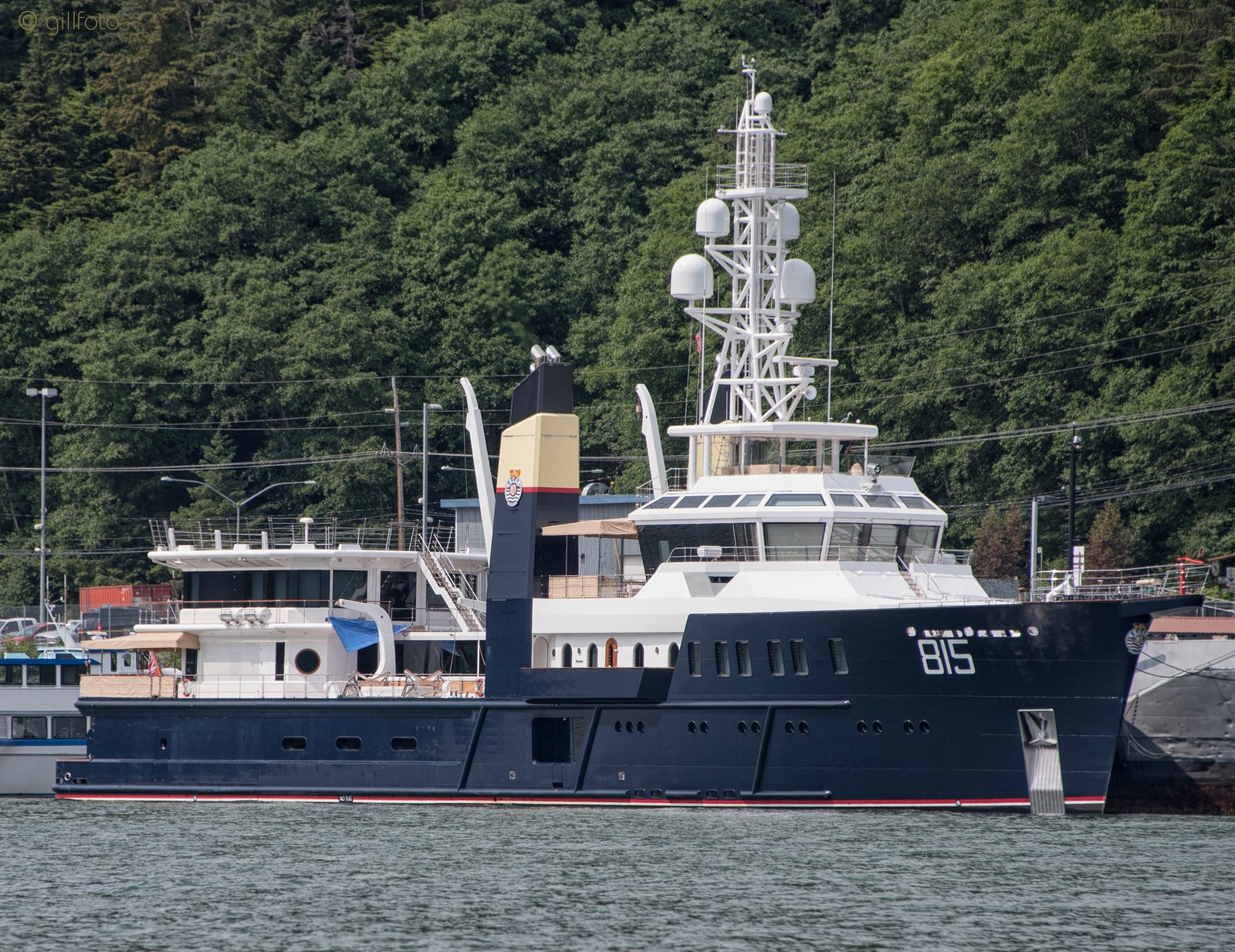
The builder's fleet record identifies Sherpa as hull 815, a 73.60-metre yacht from 2018. It describes an explorer brief, an unfaired hull and a 360-degree bridge. Naval architecture is credited to Feadship De Voogt Naval Architects, with exterior and interior design by RWD. Those credits matter: the finished yacht is a collaboration, rather than the work of one name alone.
Sherpa, photographed 19 June 2019. The working exterior helps explain this particular explorer brief; it does not define every Feadship. Photo: Kenneth John Gill / Gillfoto, Wikimedia Commons, CC BY-SA 4.0. Resized and compressed, without cropping; this adaptation retains the same licence. Archive example, not a current sale or charter offer.
Sherpa is a useful counterpoint to the idea that bespoke simply means adding more decoration. Here the outward character follows a particular purpose. Use the fleet as a source of questions about your own requirements, rather than a catalogue of standard models to order.
2. Resale: begin with an existing yacht.
Feadship's resale route introduces existing vessels for buyers and sellers. It offers another way into ownership when an existing layout and engineering platform may suit the brief. The compromise is that the starting point already exists: a refit can change aspects of it, but should not be assumed to reproduce the freedom of a new build.
Identify the yacht by name and hull number, then ask for its current particulars, maintenance and refit history, and the basis of any technical claims. Establish who represents each party and arrange appropriate independent advice and inspection. A builder's knowledge of its fleet is relevant context; it does not replace assessing the individual vessel or agreeing transaction terms. Confirm current availability directly.
3. Refit: define what needs to change.
The Refit & Services section separates refit work from service support. For an owner, the first useful distinction is between maintaining existing systems and changing how the yacht works. Put required work, desired improvements and optional ideas into a clear brief, then ask the team to identify dependencies and a practical scope.
Agree the yard or service location, the survey and approval process, responsibility for specialist contractors and what happens if opening up the vessel reveals additional work. Neither the duration nor the extent of a refit can be established from the appearance of the yacht alone. Ask how the work and technical records will be handed over to the captain and crew.
4. Support: think beyond the handover.
Feadship lists services, parts and crew support as distinct routes alongside refit. These matter to the operating life of the yacht, not just the delivery moment. Give the support team the hull number, equipment information, location and the nature of the request. Confirm the scope, regional arrangements and response expectations for the particular job; a general service-network description is not a promise about an individual call-out.
Which route fits?
Explore Feadship when you are considering a full-custom build, an existing Feadship or support for one. If the immediate aim is a holiday afloat, our first yacht-charter guide is a more useful starting point. Compare the Burgess profile for a brokerage and charter perspective. Those routes address different needs; the right choice starts with use, ownership commitment and the advice the project requires.
Use Feadship's official contact page to identify the relevant team. A concise enquiry should say whether you are exploring a new build, resale or work on an existing vessel, with its hull number where applicable. Continue through our Ultra Luxury directory for related destinations.
Sources & review.
Official descriptions reviewed 3–4 November 2026. This profile is editorial research, not a shipyard visit, technical survey or independent assessment of build quality. No paid placement or affiliate links. Send a correction.
VistaJet offers private aviation through Program, VJ25, corporate travel and individual flight enquiries. Explore its access model, cabin choices and official enquiry routes.
Explore Burgess, founded in London in 1975, for superyacht charter, purchase brokerage and owner services, with official enquiry routes and practical trip planning.
Superyacht charter · Purchase brokerage · Owner & charter management