Discover Cartier: Parisian jewellery heritage, Trinity, LOVE, Juste un Clou and Panthère, with explained design choices and official boutique and care enquiries.
Cartier: Parisian jewellery, from interlocking bands to sculptural panthers.
Cartier is a French house whose jewellery and watches are organised around recognisable shapes and motifs. Trinity, LOVE, Juste un Clou and Panthère provide four distinct introductions: intertwined bands, visible screws, a nail transformed into jewellery and the panther as a sculptural subject. This profile focuses on jewellery; the wider house also makes watches, leather goods and accessories.
A little history
Founded in Paris in 1847, Cartier has developed its jewellery vocabulary over generations. Its panther story began with a spotted motif on a watch in 1914; Jeanne Toussaint helped give the animal a three-dimensional form from the 1930s. Another route emerged in New York in 1969, when Aldo Cipullo designed the original LOVE bracelet. These histories explain different design languages within one house, rather than one uniform style.
Four ways to explore Cartier jewellery
Trinity: begin with the relationship between the bands rather than a single central stone. The house’s recent animal-motif interpretations use different ring shapes, black lacquer and contrasting gold colours, including snake scales, tiger stripes and panther spots. Compare a simpler interlocking form with a more decorated interpretation: the name spans different visual effects and wearing formats.
LOVE: the original rigid oval bracelet uses visible screws as its signature. LOVE Unlimited introduces articulated links and a concealed clasp, giving the family a flexible expression. These are meaningfully different wearing experiences. Ask to try the exact version and have its opening demonstrated; do not assume every LOVE bracelet uses the same mechanism.
Juste un Clou: a nail becomes a jewellery motif, extending beyond bracelets into rings, necklaces, earrings and a lapel pin in Cartier’s presentation. Explore this family if an everyday object translated into an expressive outline appeals. Compare the scale and position of the motif on your body, especially where a projecting shape meets clothing.
Panthère jewellery: the animal’s head, body and spots make the piece a small sculpture as well as an ornament. Gem-set examples offer another relationship between colour, surface and volume than the bands or nail forms above. Distinguish the jewellery creation from the separately named Panthère watch collection when making an enquiry.
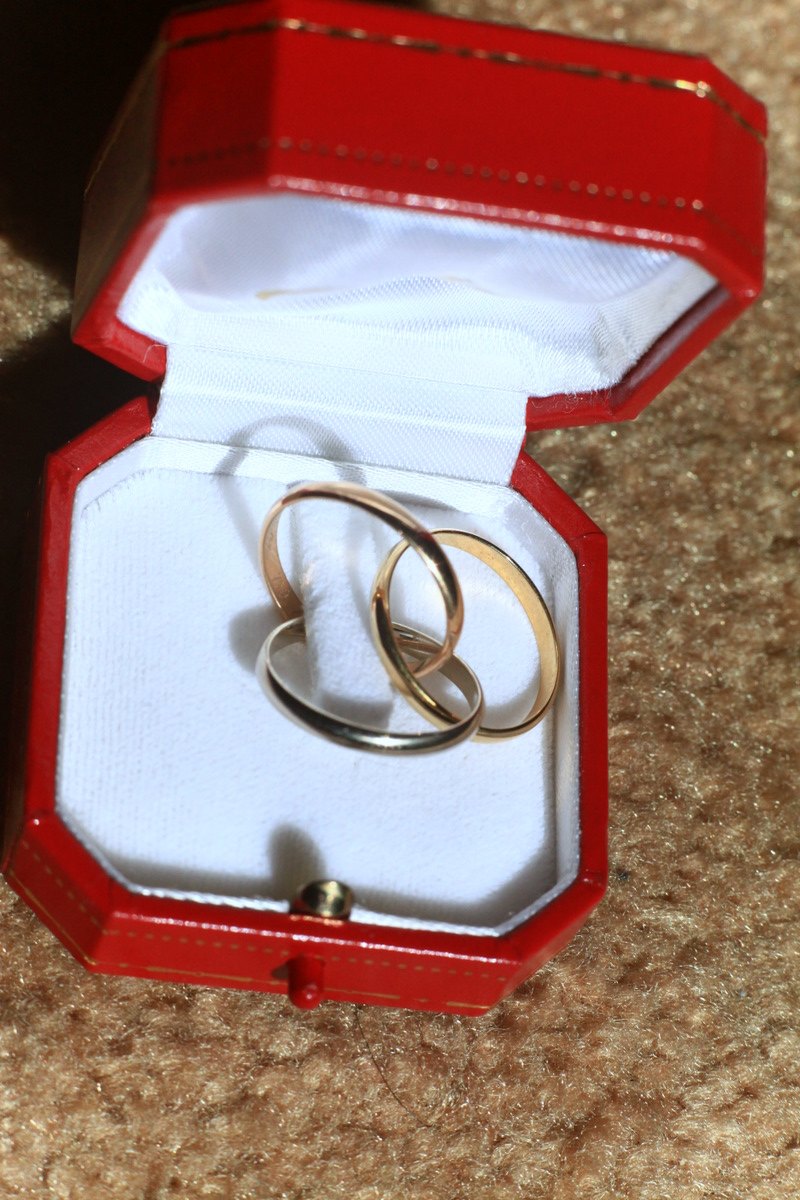
Interlocking three-colour form, March 2010. The source identifies Cartier triple-colour rings; it does not establish a current Trinity reference, metal fineness, size or authenticity. Photo: Gisling / Wikimedia Commons, CC BY-SA 3.0. Recompressed; uncropped relative to the current Commons file, which was rotated on Commons in 2022. Derivative under the same licence. Archive illustration, not a current listing.
Where to shop or enquire
Use the official Cartier boutique directory ↗ to choose a country and location, then discuss your shortlist. The LOVE story ↗ and Trinity design story ↗ are useful official browsing routes before an enquiry. Select your own market on Cartier’s shopping site before relying on online purchase or delivery options.
For a concrete local entry, the Fifth Avenue Mansion page ↗ lists contact details, an appointment link and care services. Its repair/customisation description starts with a diagnostic evaluation and discussion of available options. Confirm arrangements at your chosen boutique; this New York example does not establish services or terms everywhere.
Practical choices before committing
Our view: compare movement and volume first. A rigid LOVE bangle and flexible Unlimited are different choices even when their screw motif is familiar; a sculptural panther or nail outline has a different presence from interlocking bands. Try the piece with your normal sleeves and other jewellery, and check the exact metal, surface treatment, stones and fit with the seller.
For another design vocabulary, explore Tiffany’s link, lock and knot forms or Bvlgari’s serpent and coiling designs. These are comparison routes, not quality rankings. For pre-owned shopping, assess the seller, condition and transaction terms separately; a family name or photograph does not authenticate a piece. Ask about care, engraving and any proposed resizing before authorising work.
Explore further: how a panther’s surface is made
Cartier’s account of “fur setting” describes small grains of metal folded into fine threads, with individually shaped onyx or sapphire spots arranged around the animal’s volume. Its Trinity animal-motif account separately describes hand-applied black lacquer and fine engraved strokes on certain pavé versions. These explain specific design and craft choices; they should not be applied to every Panthère or Trinity piece, or taken as independent proof of superior durability.
Reviewed 25 October 2026. Design and craft descriptions come from Cartier and its parent company; comparisons are editorial guidance. Exact specifications and local purchase terms require confirmation for the chosen creation. Suggest a correction.
Discover Tiffany & Co., the New York jewellery house founded in 1837: its story, silver and gold jewellery, diamond engagement rings and official shopping routes.
Explore Bvlgari’s Roman roots, B.zero1, Serpenti Viper, Divas’ Dream and Tubogas, with direct product and boutique routes and practical jewellery comparisons.
Discover Van Cleef & Arpels, the Paris jewellery house founded in 1906: its story, Alhambra, Perlée and Frivole collections, and official shopping and boutique links.
Paris jewellery house · Alhambra, Perlée & Frivole · Pendants, rings & earrings