Discover Graff, the London jewellery house founded by Laurence Graff in 1960: diamond and coloured-stone jewellery, engagement rings, collections and official boutiques.
Graff: a London jewellery house with diamonds at its heart.
Graff is a London-founded jewellery house whose offering centres on diamonds and coloured gemstones. Alongside high jewellery, you can explore pendants, earrings, bracelets and rings in named collections, plus engagement and wedding rings. It is a useful destination if you want to begin with a gemstone or an occasion, then discuss the individual piece with a boutique.
A little history
Laurence Graff established the company in London in 1960. The house’s heritage account follows his interest in gemstones and the development of its jewellery business over the following decades. That diamond focus remains visible today, but the catalogue also includes coloured-stone pieces and gold bands without the elaborate settings associated with high jewellery.
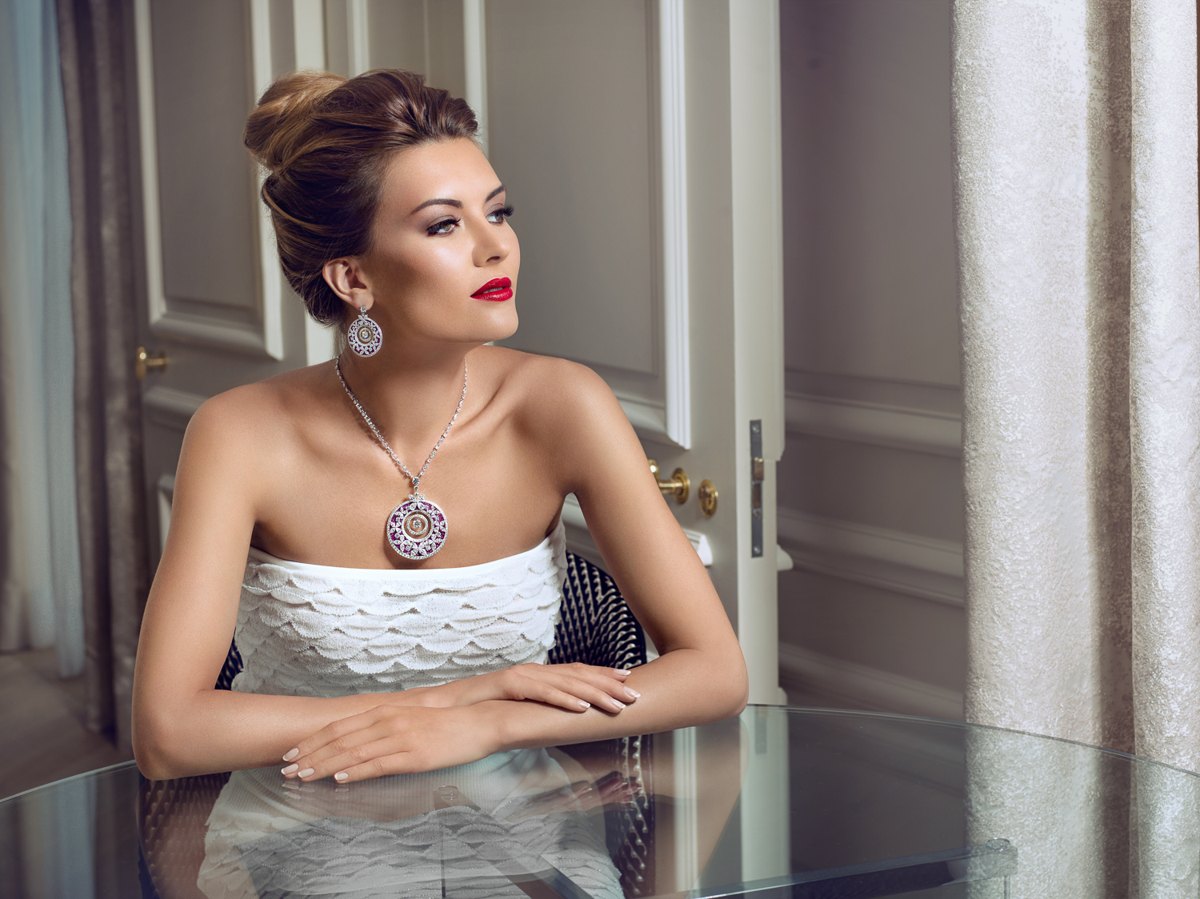
Graff high jewellery photographed in Monaco, 30 May 2017. The source does not identify the collection, exact stones or reference; this is an archive illustration, not one of the current examples below. Photo: Gil Zetbase / Wikimedia Commons, CC BY-SA 4.0. Resized and recompressed, uncropped; adaptation retains this licence.
What you can find
Diamond and coloured-stone jewellery: necklaces, earrings, bracelets and rings. Butterfly includes both diamond and coloured-stone interpretations, while Wild Flower offers floral diamond designs.
Gold jewellery: Laurence Graff Signature includes angular bands as well as other jewellery. It provides a different starting point from the floral and butterfly motifs.
Engagement, wedding and high jewellery: browse the dedicated sections for occasion-led purchases, or arrange a conversation about a particular stone or jewel. A collection overview cannot describe every individual gemstone offered.
Our view: Graff is worth exploring when the diamond or coloured stone is central to your search. For a first purchase, compare a pendant or band from a named collection before moving to more elaborate pieces. For an engagement ring, allow time to discuss the actual stone, its documentation and the setting together.
Where to buy Graff
Browse the official collections ↗, find a location through the Graff boutique finder ↗, or book an appointment ↗. Product pages also offer enquiry routes. These links lead to Graff itself; they are a direct brand route rather than a multi-brand retailer comparison.
Choose your country or region and confirm the exact piece, size and local purchase terms with the boutique. If you have a particular gemstone in mind, ask for information about that stone rather than relying on a representative photograph. For other jewellery houses, explore Tiffany & Co., Van Cleef & Arpels and the wider jewellery directory.
Practical information: care and fitting
Graff recommends storing jewels separately to avoid scratching. Its gemstone care guidance warns that some stones should not be cleaned with soap, water or liquid cleaners, so check the materials before applying a general cleaning method. For engagement-ring resizing, its FAQ directs buyers to Client Services or an appointment; confirm options for your ring before ordering or personalising it.
Explore three collections: materials, design and fitting questions
Three examples in more detail
Wild Flower pendant RGP775: the reviewed example combines white gold and white diamonds in a flower silhouette. Graff describes individually hand-rendered sculptural petals. It lists an adjustable 45 cm chain; compare where the pendant sits with the neckline you normally wear. The floral shape provides the main motif, rather than the shape of a single large stone.
Butterfly pendant RGP932: the reviewed small version combines blue sapphires and white diamonds in white gold, with a marquise diamond at the centre. It offers colour and a butterfly outline as an alternative to Wild Flower’s diamond petals. Other Butterfly references use different stones and formats, so check the full reference when comparing pieces.
Laurence Graff Signature bands RGR447 and RGR443: the reviewed white-gold set pairs 3.2 mm and 2.3 mm bands. Their angled surfaces take inspiration from diamond facets. Compare the widths on the intended finger and beside another ring; the faceted gold form is a different choice from a floral pendant or a stone-set engagement ring.
These examples explain different routes through the range, not a quality ranking or a hands-on comfort test. Graff notes that size, carat weight and stone qualities can vary between creations. Ask for the details of the particular jewel you are considering; approximate catalogue weights do not describe every individual piece.
Sources and review
Reviewed 24 October 2026. History, materials and construction statements are attributed to Graff and scoped to the examples above; shopping comparisons are editorial. Suggest a correction.
Discover Cartier: Parisian jewellery heritage, Trinity, LOVE, Juste un Clou and Panthère, with explained design choices and official boutique and care enquiries.
Trinity & LOVE · Juste un Clou & Panthère · Jewellery & boutique enquiries
Discover Tiffany & Co., the New York jewellery house founded in 1837: its story, silver and gold jewellery, diamond engagement rings and official shopping routes.
Explore Bvlgari’s Roman roots, B.zero1, Serpenti Viper, Divas’ Dream and Tubogas, with direct product and boutique routes and practical jewellery comparisons.